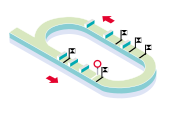
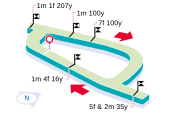
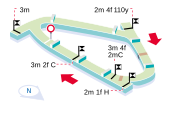
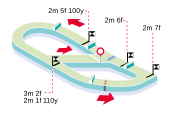
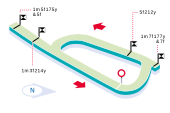
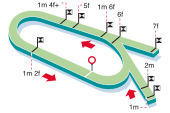
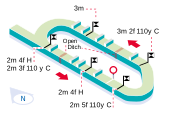
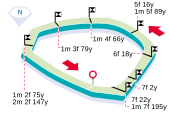
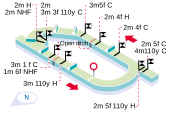
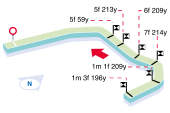
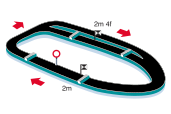
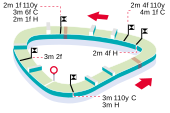
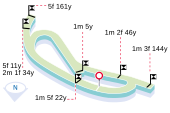
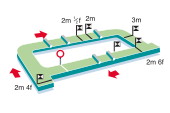
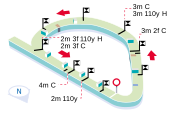
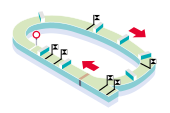
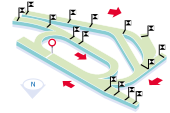
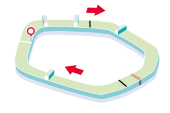
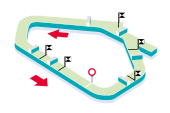
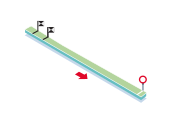
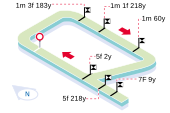
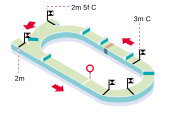
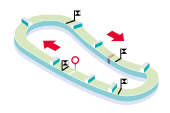
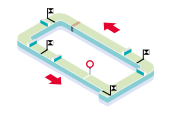
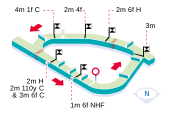
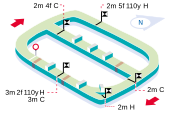
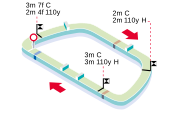
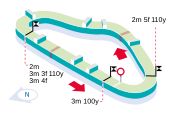
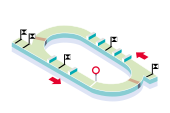
Galway Racecourse is a dual-purpose racecourse that hosts both flat racing and jumps racing.
Located six miles outside of the city of Galway in a village called Ballybrit, the course is best known for the seven-day-long Galway Festival, a seven-day spectacle and one of the world’s most renowned racing festivals. It’s a mixed meeting with the feature race being the Galway Plate, a 2m6f handicap chase held during the festival. The festival generally takes place between the last week in July and the first week in August.
The flat track is right-handed and spans just over a mile and a quarter. Similarly, the jumps track is right-handed, covering a circuit of just over ten furlongs.
Location: Galway Racecourse, Ballybrit, Galway, County Galway.
Main Racing Fixtures at Galway
Galway Betting Trends & Statistics
Over the past three years, Dermot Weld has emerged as the top flat racing trainer. In the same period, Colin Keane and Shane Foley have both excelled as the leading flat racing jockeys, sharing the top spot.
For National Hunt racing, Willie Mullins has been the foremost trainer, with Paul Townend leading the way as the top National Hunt jockey.
Galway Races History
The Galway racecourse has a storied history dating back to 1869. The Galway Plate was the first mahor race of the meeting, a handicap chase staged over 2 and a half miles which featured 8 fences and two dry-stone walls.
Initially, horses were transported to the course by train, free of charge, setting the stage for the event’s growth. Over time, the Galway Festival steadily grew in popularity and so more races were added.
As such, the Galway Festival evolved from its early days, becoming a three-day event in 1959. It further expanded to four days in 1971, reflecting its rising popularity. In 1974, the festival continued to grow and extended to five days, and then to six days in 1982.
In response to the festival’s enduring popularity and to accommodate the increasing number of racegoers, the event was lengthened to seven days in 1999, marking its current format. This progression underscores the festival’s significance in the racing calendar and its appeal as a summer celebration for racing enthusiasts.
 Free Bets